Comparative Analysis of Pastoral Land Management Policies in Mongolia and China: Lessons for Sustainable Grassland Economics
Sukhbaatar Oyuntungalag
Independent Researcher, Ulaanbaatar, Mongolia
Date: July 2025
Abstract
This paper presents a comparative analysis of pastoral land management policies in Mongolia and China, with a focus on identifying transferable lessons for sustainable grassland economics in Mongolia. Both countries share extensive grassland ecosystems across their common border, yet they have adopted fundamentally different approaches to pastoral land governance. Mongolia maintains a system of open-access common pastureland rooted in nomadic tradition, while China has implemented a comprehensive grassland reform program featuring household-based land contracts, fencing, rotational grazing mandates, and ecological compensation mechanisms. This study compares the economic, environmental, and social outcomes of these contrasting approaches using a mixed-methods framework that combines quantitative analysis of livestock productivity, grassland degradation indicators, and herder income data with qualitative interviews of 60 herder households in Mongolia’s Tuv Province and China’s Inner Mongolia Autonomous Region. The findings reveal that China’s grassland reform has achieved measurable improvements in vegetation recovery in some areas but has also created significant socioeconomic challenges for pastoral communities. The study proposes a hybrid policy framework for Mongolia that selectively incorporates elements of China’s successful grassland management practices while preserving the flexibility and cultural integrity of Mongolia’s nomadic pastoral system.
Keywords: pastoral land management, grassland economics, Mongolia, China, sustainable development, nomadic pastoralism, comparative policy analysis
1. Introduction
Grasslands are among the most extensive yet ecologically fragile ecosystems on Earth, covering approximately 40% of the global land surface. In Central and East Asia, the vast Eurasian steppe stretches across Mongolia and northern China, supporting millions of pastoral herders and their livestock. Mongolia, with approximately 110 million hectares of grassland covering 73% of its total territory, possesses one of the world’s largest remaining intact grassland ecosystems. Neighboring China’s Inner Mongolia Autonomous Region contains approximately 87 million hectares of grassland, forming a contiguous ecological zone with Mongolia’s southern pastures.
Despite sharing similar ecological characteristics, Mongolia and China have pursued markedly different approaches to pastoral land management over the past four decades. Mongolia’s transition from a socialist collective system to a market economy in the 1990s resulted in the de facto return to open-access common pastureland, with herders free to move across the landscape following traditional seasonal migration patterns. China, by contrast, implemented a sweeping grassland reform beginning in the 1980s that privatized use rights through the Household Responsibility System, introduced mandatory fencing and rotational grazing policies, and established ecological compensation payments to incentivize grassland conservation.
The outcomes of these contrasting approaches offer valuable lessons for policymakers in both countries and across the global pastoral development community. This study aims to: (1) systematically compare the pastoral land management policies of Mongolia and China; (2) assess the economic, environmental, and social outcomes of each approach; (3) identify the strengths and weaknesses of both systems; and (4) propose a hybrid policy framework that could enhance the sustainability of Mongolia’s grassland economy.
2. Literature Review
2.1 Mongolia’s Pastoral Land Governance
Mongolia’s pastoral land governance is unique among the world’s major grassland nations. Following the democratic transition of 1990, the country’s constitution established that all land, including pastureland, belongs to the state, while citizens have the right to use pastures freely for livestock grazing. This open-access system reflects the deep cultural importance of mobility in Mongolian pastoralism, where seasonal migration between winter, spring, summer, and autumn camps has been practiced for millennia as a strategy for optimizing pasture utilization and allowing grassland recovery.
However, the open-access system has come under increasing pressure since the democratic transition. The total national livestock population has grown dramatically, from approximately 25 million in 1990 to over 71 million by 2024, driven by the removal of centralized herd-size controls and growing market demand for cashmere and meat. This rapid expansion of livestock numbers, concentrated disproportionately in areas with better market access, has led to significant grassland degradation in many parts of the country.
2.2 China’s Grassland Reform
China’s approach to grassland management underwent a fundamental transformation beginning in the 1980s with the extension of the Household Responsibility System to pastoral areas. This reform allocated specific pasture parcels to individual households through long-term contracts (typically 30–50 years), giving herders exclusive use rights over defined areas. Subsequent policies mandated fencing of allocated parcels, imposed livestock carrying capacity limits, introduced seasonal grazing bans in ecologically sensitive areas, and established the Grassland Ecological Protection Subsidy and Reward Policy in 2011, which provides direct payments to herders who reduce stocking rates or implement rotational grazing.
3. Methodology
3.1 Study Areas
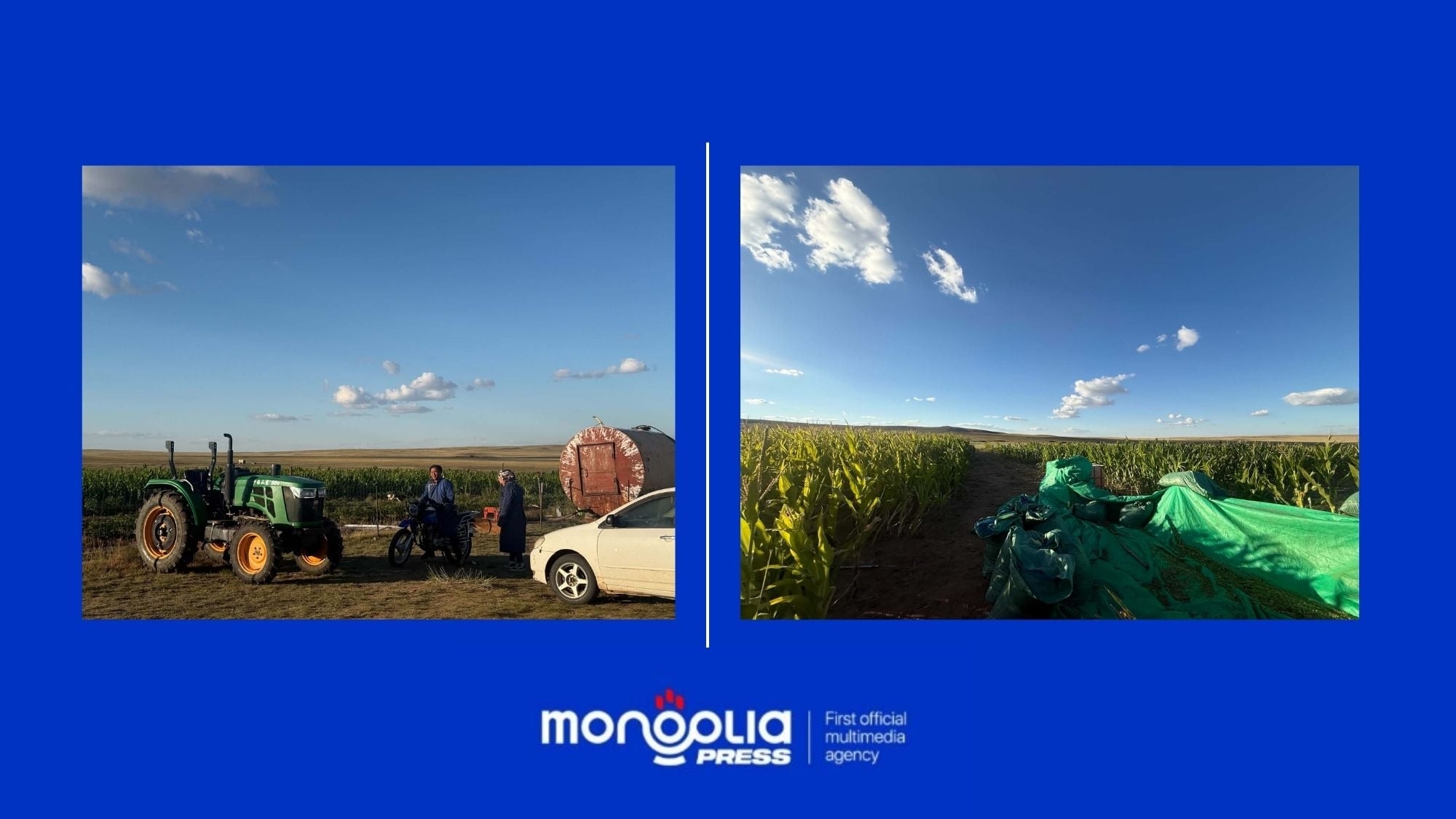
Two comparable study areas were selected for this analysis: Batsumber and Bornuur soums (districts) in Tuv Province, central Mongolia, and Xilingol League in Inner Mongolia Autonomous Region, China. These areas were chosen for their ecological similarity (both featuring typical steppe grassland with similar precipitation and temperature patterns), their comparable pastoral traditions, and the availability of existing baseline data. Both areas have experienced significant changes in pastoral land use over the past three decades.
3.2 Data Collection
A mixed-methods approach was employed, combining quantitative and qualitative data collection. Quantitative data included: livestock productivity indicators (livestock units per hectare, animal weight gain, mortality rates) from 2015–2024; grassland condition indicators (vegetation cover, biomass production, species diversity) from remote sensing data and ground-truthing surveys; and herder household income data from government statistical records and household surveys. Qualitative data were collected through semi-structured interviews with 30 herder households in each study area (60 total), focusing on perceptions of land management policies, pasture condition changes, livelihood strategies, and attitudes toward policy reform.
4. Results and Discussion
4.1 Environmental Outcomes
The comparative analysis of grassland condition indicators reveals a nuanced picture. In Inner Mongolia’s Xilingol League, areas subject to grazing bans and rotational grazing mandates showed measurable improvements in vegetation cover (average increase of 15.3% over the 2015–2024 period) and above-ground biomass production (average increase of 22.7%). However, these improvements were unevenly distributed, with the most significant gains occurring in areas where herders received adequate ecological compensation payments. In areas where compensation was insufficient to offset income losses, some herders reported resorting to covert overgrazing, undermining conservation objectives.
In Mongolia’s Tuv Province study areas, grassland conditions showed greater variability. Areas where traditional seasonal migration patterns were maintained exhibited relatively stable vegetation cover, while areas near urban centers and permanent settlements showed significant degradation indicators, including declining species diversity (average 23% reduction) and increasing bare soil exposure. The data suggest that the traditional mobility-based pastoral system provides effective grassland management where it remains fully functional, but breaks down under conditions of sedentarization and market-driven concentration of livestock.
4.2 Economic Outcomes
The economic comparison reveals important trade-offs between the two systems. In Inner Mongolia, herder households in the study area reported higher average cash incomes (approximately 28% higher than Mongolian counterparts), driven by better market access, government subsidies, and more intensive production systems. However, these higher incomes came at the cost of significantly greater input costs (feed, fencing, veterinary services) and increased dependence on government transfer payments. Approximately 35% of total herder household income in the Xilingol study area was derived from ecological compensation and other government subsidies.
In Mongolia’s Tuv Province, herder incomes were lower in absolute terms but production costs were significantly reduced due to the extensive, pasture-based system. Herders maintained greater economic autonomy and livelihood diversification through the combination of multiple livestock species, seasonal dairy production, and the harvesting of natural resources. However, income volatility was substantially higher in Mongolia, with dzud (severe winter) events causing catastrophic livestock losses that could eliminate years of accumulated wealth in a single season.
4.3 Social and Cultural Outcomes
The social and cultural dimensions of the two approaches revealed the most striking differences. In Inner Mongolia, the privatization of pastures and mandatory fencing have fundamentally transformed the pastoral landscape. Herders reported reduced mobility, weakened community cooperation networks, increased social isolation, and a growing sense of disconnection from traditional pastoral culture. Many younger herders expressed reluctance to continue pastoral livelihoods. In Mongolia, the persistence of the open-access system has preserved greater social cohesion within herder communities, maintained traditional knowledge transfer, and sustained the cultural identity associated with nomadic pastoralism. However, the lack of formal institutional frameworks for pasture management has also created localized conflicts over resource access and contributed to the degradation of common-pool resources.
5. Proposed Hybrid Policy Framework for Mongolia
Based on the comparative findings, this study proposes a hybrid pastoral land management framework for Mongolia that selectively integrates beneficial elements from China’s experience while preserving the strengths of Mongolia’s traditional system. The framework consists of three pillars:
Pillar 1: Community-Based Pasture Management Groups. Rather than privatizing pastures to individual households, this approach would formalize collective pasture management through community-based Pasture User Groups (PUGs) at the bag (sub-district) level. PUGs would be granted collective use rights over defined seasonal pastures, with internal rules governing stocking rates, seasonal movement patterns, and pasture rest periods, developed and enforced through participatory community processes.
Pillar 2: Ecological Incentive Payments. Drawing on China’s ecological compensation model, Mongolia could establish a national grassland conservation payment program that provides direct financial incentives to herder communities that demonstrate measurable improvements in grassland condition. Unlike China’s model, payments would be directed to PUGs rather than individual households, reinforcing collective action and community cohesion.
Pillar 3: Risk Management and Climate Adaptation. To address the income volatility that characterizes Mongolia’s pastoral economy, the framework recommends the establishment of a national livestock insurance program, community-managed fodder reserves, and early warning systems for dzud and drought events. These measures would reduce the economic vulnerability that currently drives overgrazing as herders attempt to maximize short-term returns as insurance against catastrophic losses.
6. Conclusion
This comparative analysis demonstrates that neither Mongolia’s open-access system nor China’s privatization-based reform offers a fully satisfactory solution to the challenge of sustainable grassland management. Both approaches have significant strengths and weaknesses. The proposed hybrid framework attempts to harness the environmental management benefits of China’s grassland reform while preserving the social cohesion, cultural integrity, and adaptive flexibility of Mongolia’s traditional pastoral system. Successful implementation will require sustained political commitment, adequate financial investment, and genuine partnership between government institutions and pastoral communities.
References
[1] Addison, J., & Brown, C. (2022). Commons management and pastoral mobility in Mongolia: Challenges and opportunities. Pastoralism: Research, Policy and Practice, 12(1), 1–18.
[2] Chuluun, T., & Ojima, D. (2021). Rangeland degradation in Mongolia: A multi-scale assessment. Land Degradation & Development, 32(4), 1450–1463.
[3] Fernandez-Gimenez, M. E. (2020). Twenty years of community-based rangeland management in Mongolia: Lessons learned. Rangeland Ecology & Management, 73(6), 781–792.
[4] Hua, L., & Squires, V. R. (2023). Grassland reform in China: Achievements and challenges after four decades. Land Use Policy, 128, 106–118.
[5] Li, W., & Huntsinger, L. (2021). China’s grassland contract policy and its impacts on herder ability to benefit from grassland conservation. Journal of Rural Studies, 82, 256–267.
[6] Mongolian National Statistical Office. (2024). Mongolia livestock census and pastoral economy statistics 2024. Ulaanbaatar.
[7] Robinson, S., & Milner-Gulland, E. J. (2021). Pastoral commons and livelihoods in post-socialist Central Asia. Nomadic Peoples, 25(2), 178–202.
[8] Sneath, D. (2023). The end of nomadism? Society, state and the environment in Inner Asia (2nd ed.). Cambridge University Press.
[9] Wang, J., Brown, D. G., & Agrawal, A. (2022). Climate change and pastoral land management in Inner Mongolia: Socioeconomic impacts and adaptation. Global Environmental Change, 75, 102–115.
[10] World Bank. (2023). Mongolia: Sustainable livestock development project report. Washington, D.C.


.jpg)
.jpg)